Skip to content

Flake graphite · Nordre Strømfjord region

Akuliaruseq Graphite

Akuliaruseq is a historically drill-tested flake-graphite system, traceable for about 7 km, with 124 historic drill holes and pilot-plant metallurgy. It is a re-evaluation opportunity, not a current Mineral Resource and not a development-ready asset.

Overview

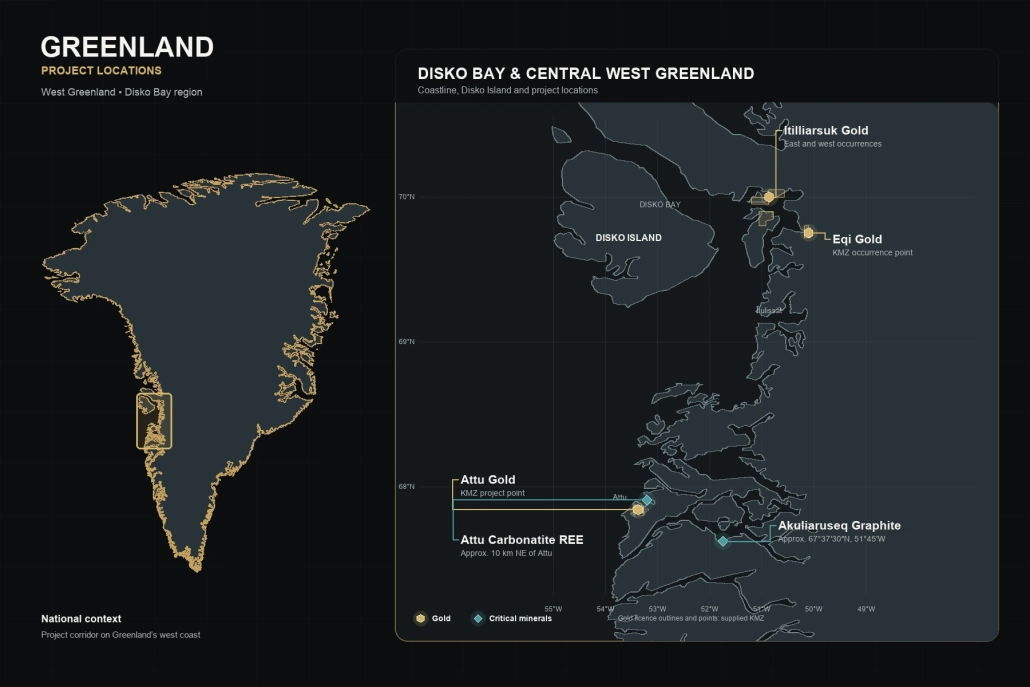
Akuliaruseq is a historically drill-tested flake-graphite system in the Nordre Strømfjord region of central West Greenland. Mineralisation is traceable for approximately seven kilometres and was tested by 124 historic drill holes totalling 5,705 metres, together with pilot-plant flotation work.

Graphite occurs in biotite–sillimanite schists and mylonitic high-strain zones. Historic results include disseminated material typically grading 6–8% graphitic carbon and structurally controlled zones grading 20–24%. Pilot-plant work reportedly produced concentrates containing approximately 90–94% carbon, although this does not establish battery-grade, customer-qualified or economic material.

Akuliaruseq is a re-evaluation opportunity, not a development-ready asset. Historic resource figures are non-compliant and are not current Mineral Resources. Tenure confirmation, core verification, modern graphitic-carbon assays, drilling, metallurgy and environmental baseline work are required before resource or product claims can be made.

Why it matters

  • 124 historic holes for 5,705 m (1982–83)
  • About 7 km mineralised strike, open along strike and at depth
  • Historic pilot-plant flotation
  • Western-aligned supply-chain context for flake graphite

Reported historic grades

  • Disseminated flake: typically 6–8% graphitic carbon (Cg)
  • Structural / mylonitic zones: 20–24% Cg
  • Headline older “9.5% C” figures were largely loss-on-ignition and can overstate true Cg

Historic metallurgy

  • Pilot-plant concentrates around 90–94% carbon in the +100-mesh fraction
  • Reported coarse-flake fractions, including up to about 50% +100 mesh and about 20% +48 mesh
  • Sulphide-rich host rock is a processing and environmental consideration

Geological setting

Graphite occurs in biotite–sillimanite schists and mylonitic high-strain zones within upper-amphibolite-facies rocks of the ~1.85 Ga Nagssugtoqidian orogen. Two styles are recognised: disseminated flake along foliation, and higher-grade films and seams in deformed zones. Grade correlates with deformation; high headline grades are not continuous across the full width of the package.

Historic drilling tested only to about 40 m. Deeper continuity is conceptual.

Outstanding work

Before any resource or product claim can be made, the technical overview identifies the need to confirm mineral tenure, recover and re-log historic core, assay for graphitic carbon rather than loss on ignition, twin historic holes, and run modern metallurgy including sulphur deportment. Environmental baseline work, including acid-rock drainage characterisation, has not been completed.

Tenure standing in 2026 is identified in the overview as a due-diligence item and is not asserted here.

Field gallery