Skip to content

Gold · BIF-hosted · ~70 km² exclusive exploration licence

Itilliarsuk Gold

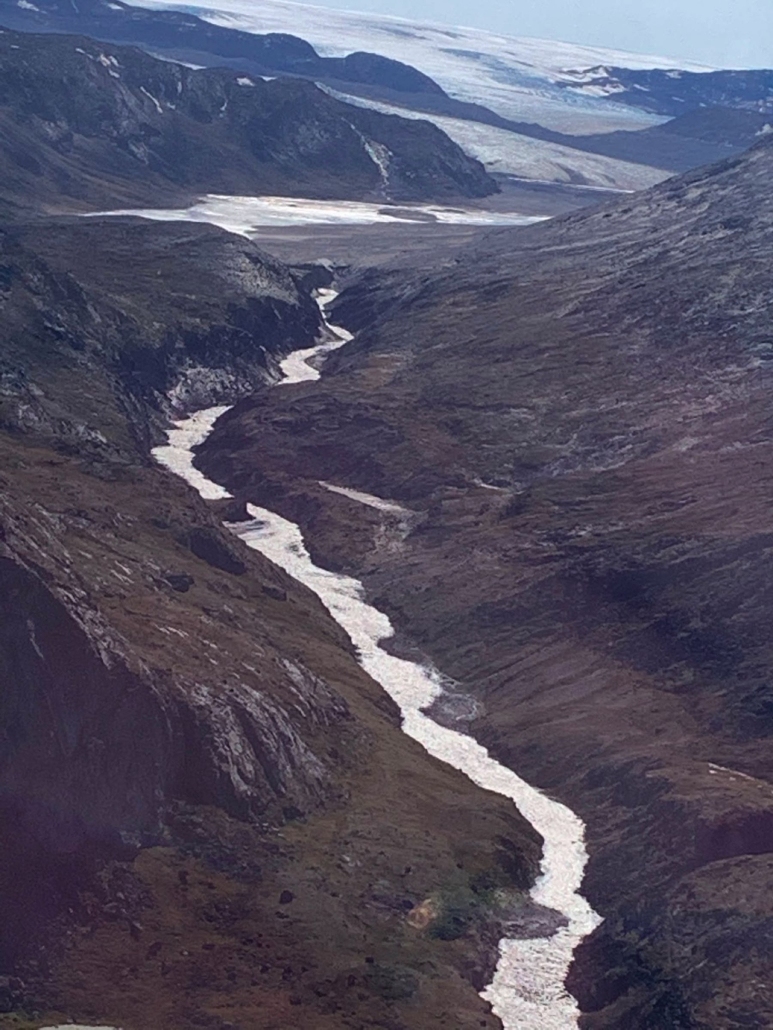
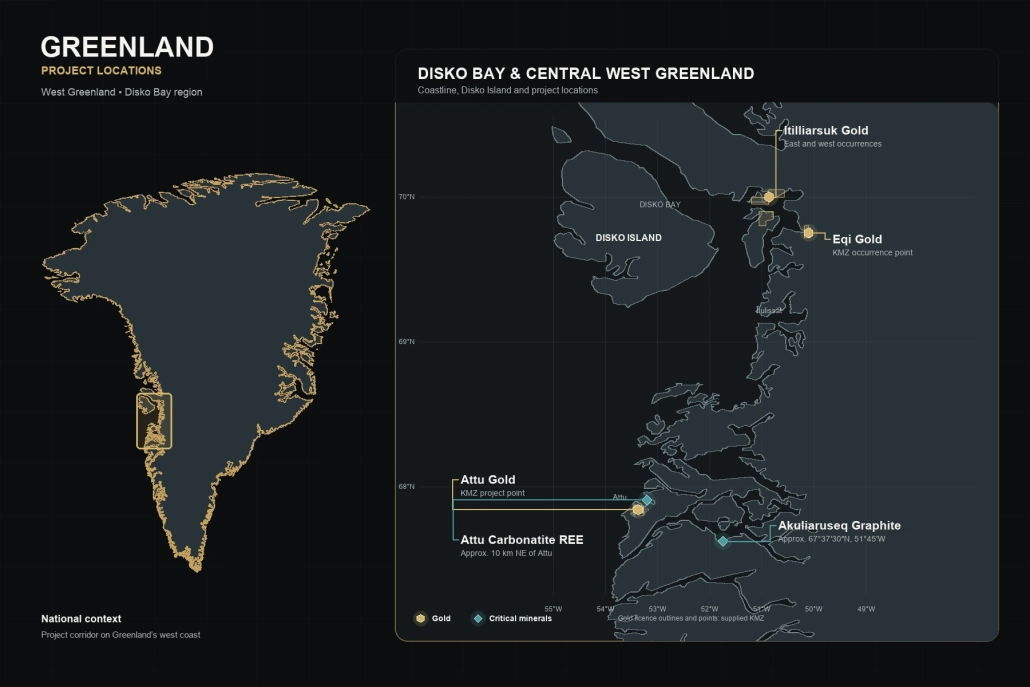
Itilliarsuk is a banded iron formation-hosted gold system on the south coast of Nuussuaq. BIF-hosted gold is an important deposit style globally. Analogues such as Homestake and Musselwhite describe geological setting, not equivalent size or economics.

Overview

Itilliarsuk is an exploration-stage, banded iron formation-hosted gold project on the southern coast of Nuussuaq. Its approximately 70 km² exclusive exploration licence covers an Archean metasedimentary sequence containing iron formation, quartz-sericite schist, sulphidic mica schist and amphibolite.

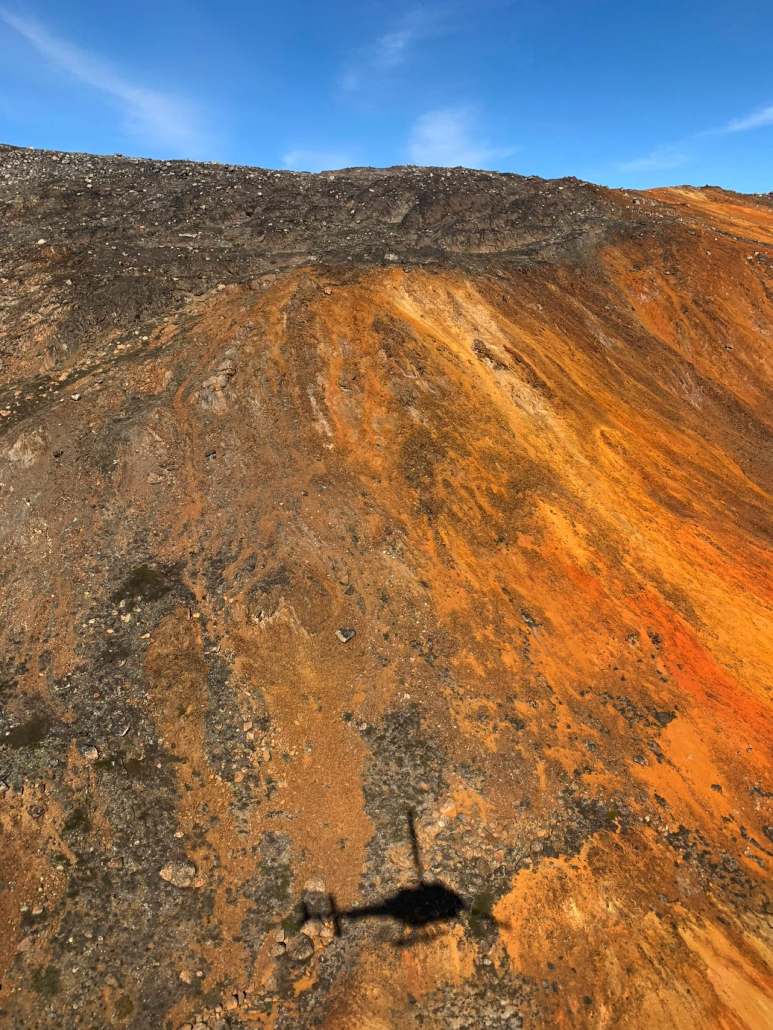
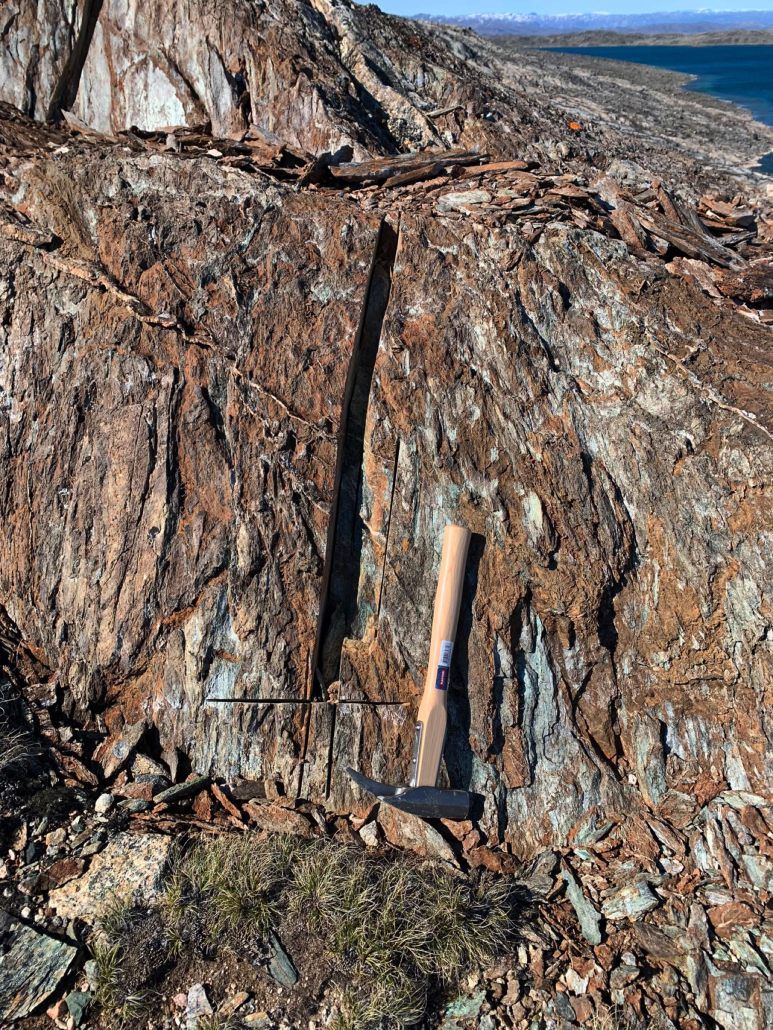
Gold occurs in quartz-sericite shear zones, sulphide-rich horizons and BIF layers containing magnetite, pyrite and pyrrhotite. Reported results include 9 g/t Au over 1.7 metres from channel sampling, gold up to 41 g/t Au in shear zones, and a reconnaissance drill result of 0.82 g/t Au over 3.1 metres.

Historic work has included surface sampling and limited reconnaissance drilling. Mineralised structures are reported over 500–800 metres, with parallel shears and untested depth potential. No Mineral Resource or Mineral Reserve has been defined, and further exploration is required to establish the continuity, width and grade of mineralisation.

Why it matters

  • BIF-hosted gold setting
  • Strong early surface grades
  • Sulphide-rich horizons locally confirmed at depth
  • Underexplored relative to the conceptual model

Key reported results

  • Channel: 9 g/t Au over 1.7 m in quartz-sericite shear
  • Gold up to 41 g/t Au in shear zones
  • Reconnaissance drilling: 0.82 g/t Au over 3.1 m (1998 programme, 6 holes, 1,482 m)
  • Quartz-sulphide veins traceable more than 800 m in places

Status

Exploration-stage. The Technical Report Summary describes it as conceptually strong and under-explored. Historic drilling is reconnaissance only.

Geological setting

Hosted in an Archean (~2.85 Ga) metasedimentary sequence. Units include:

  • Banded iron formation — oxide (magnetite-rich) and sulphide facies (pyrite + pyrrhotite), locally up to 150 m thick
  • Iron formation horizons traceable for 4 km in the broader setting
  • Quartz-sericite schist — host to the highest-grade gold results
  • Sulphidic mica schist and amphibolite
  • Pillow lavas and felsic volcanics in the wider belt

Mineralisation and potential

Gold occurs in quartz-sericite shear zones, sulphide-rich horizons, and BIF layers with magnetite, pyrite and pyrrhotite. Mineralised structures are traceable for 500–800 m along strike, with multiple parallel shears and untested depth potential.

Homestake (South Dakota) and Musselwhite (Ontario) are cited in the technical literature as geological analogues. They are not a forecast of Itilliarsuk’s size or economics.